Comparison · 9 min read · June 1, 2026
Anonymous Compliments vs. Public Praise: Which One Actually Helps Your Team More?
If your team celebrates wins loudly in Slack, that's great — but research suggests you may be leaving half your people behind. Studies consistently show that 30–50% of employees are introverts [1], and most workplace recognition systems are designed entirely for the other half. The real question isn't whether praise matters — it's whether the format of that praise is reaching everyone who deserves it.
- Psychological safety is the foundation: Harvard's Amy Edmondson found that psychological safety — not talent or resources — is the strongest predictor of team performance, acting as the mediating variable between a team's willingness to speak up and its actual results. [2]
- Introversion is not a minority trait: According to Susan Cain's research, 30–50% of people are introverts, meaning conventional public praise rituals may actively alienate up to half of your team. [1]
- Public recognition builds culture visibility: A Gallup-cited survey found that 37% of employees were more likely to report a strong culture of recognition when praise was mostly public — but only when employees felt comfortable receiving it. [3]
- Anonymous praise fills a different gap: Anonymous compliments reduce the fear of social judgment in both the sender and the receiver, making appreciation flow more freely — especially on smaller teams where every interaction carries extra social weight.
- The format shapes participation: When appreciation is exclusively public, quieter team members often stay silent — both as givers and as receivers. Anonymous channels give them a genuine path in.
- Neither format wins outright: The research points toward a layered approach — with anonymous, low-stakes recognition serving as the foundation that makes public celebration feel safer and more genuine.
| Dimension | Public Praise | Anonymous Compliments |
|---|---|---|
| Best for | Extroverts, milestone moments | Introverts, everyday appreciation |
| Psychological safety impact | High — but only once baseline trust exists | Builds the baseline trust needed for public praise |
| Participation breadth | Lower — louder voices dominate | Higher — removes social performance anxiety |
| Employee preference | Younger workers often prefer public [3] | Older workers & introverts prefer private [3] |
| Culture visibility | Strongest signal of recognition culture [3] | Less visible, but often more deeply felt |
| Risk of backfire | Embarrassment for private personalities | Ambiguity without adequate context |
TL;DR: Public praise is powerful but uneven in its reach; anonymous compliments unlock appreciation from team members who would otherwise stay silent — and together, they create a recognition culture that actually works for everyone.
Why the Format of Recognition Matters More Than You Think
The Psychological Safety Link
Amy Edmondson, a professor at Harvard Business School, spent decades studying what separates high-performing teams from average ones. Her landmark 1999 paper in the Administrative Science Quarterly studied 51 work teams and found that psychological safety predicted learning behavior, and learning behavior predicted performance — the link between safety and results was not direct, but always ran through those learning behaviors. [2]
Google's Project Aristotle, which analyzed 180 teams using both qualitative and quantitative data, independently arrived at the same conclusion: psychological safety was the single most critical factor in team success, statistically correlated with performance, collaboration, and innovation. [4]
The reason this matters for recognition is subtle but important: psychological safety is not built through grand gestures. It is built through dozens of small, everyday moments in which people feel seen, valued, and unjudged. Public recognition — a shout-out in a meeting, a Slack post — is one such moment. But for the 30–50% of people who experience public attention as stressful rather than rewarding, that moment can feel like the opposite of safety. [1]
"Psychological safety is not about being nice. It is about creating a climate in which people can speak up with work-relevant content." — Amy Edmondson, Harvard Business School Professor [2]
Anonymous appreciation, by contrast, strips away the performance layer. No one is watching the transaction. The giver doesn't have to manage their social image. The receiver doesn't have to perform gratitude in front of an audience. The kindness lands cleanly.
The Introversion Blind Spot in Workplace Recognition
Susan Cain's research, summarized in her bestselling book Quiet and carried forward by the Quiet Revolution, documents a persistent design flaw in modern workplaces: most systems — from open-plan offices to brainstorming sessions to recognition rituals — are built for extroverts. Between 30% and 50% of people are introverts, yet few organizations account for this when designing how appreciation flows. [1]
Cain's data also highlights that productivity can suffer when work environments ignore temperament differences — but that when organizations do acknowledge those differences, both introverts and extroverts perform better. Recognition design is no different. A system that only celebrates people publicly effectively taxes introverts every time it's used. They must either accept uncomfortable attention or quietly opt out of the culture entirely.
This opt-out is invisible and easy to miss. On the surface, a team's Slack recognition channel looks lively. But when you examine who is sending and receiving praise, the same extroverted voices tend to dominate — a pattern documented in peer-recognition research and familiar to anyone who has managed a mixed team.

Public Praise: Where It Shines and Where It Falls Short
The Real Strengths of Public Recognition
There is real, documented value in public praise — the data is clear on this. According to research cited by Gallup, 37% of employees were more likely to say their organization had a strong culture of recognition when praise was mostly public, compared to just 11% when recognition was exclusively private. [3] That's a powerful signal: visibility matters. When recognition happens in the open, it communicates values to the entire team, not just the recipient. It answers the question what does success look like here? with a live example.
Public recognition also tends to create what researchers call "social proof of appreciation" — when one person is celebrated, others are reminded that contribution is noticed, which can increase discretionary effort across the group. For teams that already have a high baseline of psychological safety, public praise is a force multiplier.
Companies with structured peer recognition programs — which typically include a public component — see 37% better results than those without such systems. [5] These aren't marginal gains.
Where Public Praise Breaks Down
The problem arises when public recognition is the only available format, and when team leaders assume that what motivates a confident extrovert motivates everyone equally. Research on employee preferences shows that older workers and more private personalities tend to prefer private acknowledgment, while younger workers skew toward public praise. [3] A one-size recognition system leaves a significant portion of any team underserved.
There is also the anxiety problem. For employees who already worry about standing out or being judged, being singled out — even positively — can trigger a stress response. Being called out in a meeting for a job well done can feel like being put on a stage they didn't choose to stand on. The moment the manager moves on, that employee may feel more self-conscious, not more confident.
| Team Scenario | Public Praise Works Well | Anonymous Works Better |
|---|---|---|
| Celebrating a project launch | ✅ Strong — milestone visibility | ❌ Too small a gesture for the moment |
| Everyday "thank you" | ❌ Can feel performative | ✅ Natural, low-friction |
| Cross-department collaboration | ✅ Signals values company-wide | ✅ Gives quieter contributors a voice |
| Teams with trust issues | ❌ Risk of embarrassment or cynicism | ✅ Safer entry point |
| Remote/async teams | ⚠️ Depends on async culture | ✅ Works well across time zones |
| New employees | ⚠️ Can feel exposing | ✅ Eases into belonging |
Anonymous Compliments: The Case for Low-Stakes Appreciation
How Anonymity Changes the Giving Side
One underappreciated dimension of anonymous compliments is what they do for the sender, not just the recipient. In many small teams, an employee might genuinely appreciate a colleague's work but hold back from saying so publicly — out of worry about seeming overly effusive, about how their words will land, or simply because the moment has passed and circling back feels awkward.
Anonymity removes all of that friction. The sender can express genuine appreciation without managing the social optics of the gesture. This matters because the biggest barrier to peer appreciation isn't that people don't feel it — it's that they don't express it. Designing recognition systems that reduce the cost of expressing kindness predictably increases the volume of kindness expressed.
Research on anonymous peer assessment in professional and educational settings has found that anonymity leads to more candid and complete feedback, and increases participants' self-perceived social effects — they feel more comfortable engaging with the process at all. [6] These findings map directly onto workplace compliment systems: when the social risk is lower, more people participate.
"When organizations acknowledge and accommodate temperament differences, both introverts and extroverts perform better. It's not a zero-sum game." — Susan Cain, Author of Quiet and Quiet Revolution Founder [1]
The Receiving Experience: Feeling Seen Without Being Spotlit
For the recipient, an anonymous compliment carries a specific kind of weight. It can't be attributed to a manager trying to motivate them or a colleague who wants something in return. It arrives as a pure signal: someone thought this about you and took a moment to say so. That purity of intent is harder to dismiss than a compliment with a visible social context.
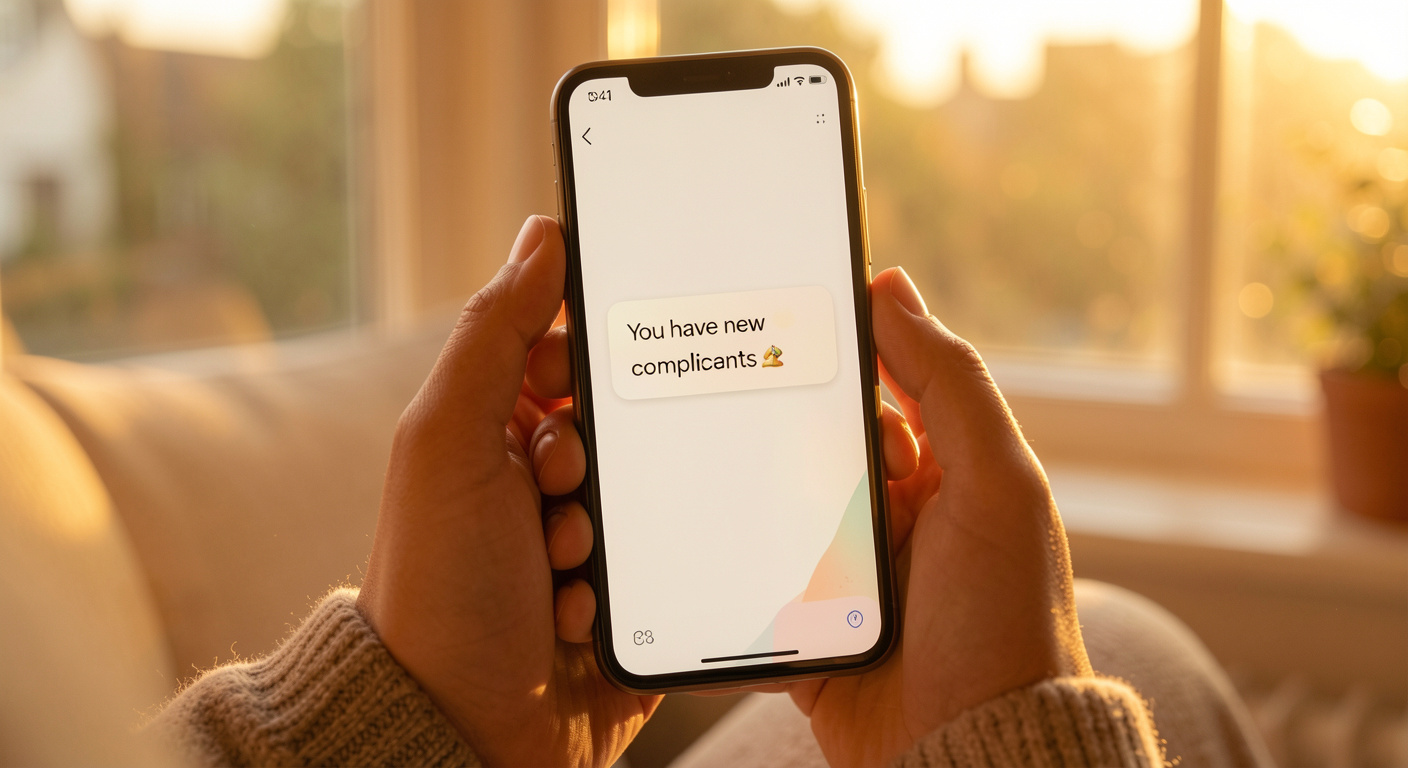
There's also a timing consideration. Delivering anonymous compliments on a specific cadence — Friday afternoons, for example — turns appreciation into a ritual rather than a random event. Behavioral research on positive reinforcement consistently shows that predictable, anticipated positive experiences have a compounding effect on mood and engagement. Knowing that kind words might arrive at the end of the week creates a low-level sense of anticipation that subtly shifts how people feel about their work throughout the week.
Explore how this kind of structured cadence fits into a broader strategy in 7 Friday Rituals That Actually Boost Team Morale Before the Weekend — it pairs directly with the concept of a Friday compliment drop.
Building a Recognition System That Works for Your Whole Team
The Layered Approach: Anonymous First, Public When Earned
The most effective small-team recognition cultures don't choose between public and private — they layer them. Anonymous, low-stakes appreciation functions as the foundation: it keeps the baseline of appreciation flowing without requiring anyone to perform. Public recognition then works better on top of that foundation because the psychological safety to receive attention has already been built through dozens of smaller, private moments.
Think of it like warming up a room. Trying to open a team meeting with big public praise when the underlying culture hasn't been nurtured is like trying to start a fire without kindling. The anonymous layer is the kindling — it gets things burning quietly, so the public celebration feels natural rather than forced.
For a comprehensive approach to building this kind of culture, How to Build a Culture of Appreciation on a Small Team (Without It Feeling Forced) walks through the specific habits and systems that make appreciation authentic rather than performative.
Practical Implementation for Small Teams
Small teams — typically under 50 people — face a unique recognition challenge: everyone knows everyone, which means every public gesture carries extra social weight. The stakes of awkward recognition are higher, and the benefits of getting it right are more direct. Here's how to implement a layered system:
- Start with an anonymous channel. Establish a way for team members to send short, sincere appreciation notes to specific colleagues without their name attached. Keep it simple — a single-purpose inbox works better than a feature buried inside a larger tool.
- Set a delivery cadence. Friday afternoon delivery creates a weekly ritual that people begin to anticipate. It closes the week on a human note.
- Layer in optional public sharing. Once trust is established, invite (never require) recipients to share a compliment publicly if they choose. This preserves autonomy.
- Celebrate the system, not just the content. Noting that "we sent 23 compliments this week" is itself a culture signal — without exposing individual messages.
- Keep it peer-to-peer. Manager-only recognition reinforces hierarchy. True peer systems signal that everyone's contribution is worth noticing.
If you're evaluating tools to support this kind of program, The Best Employee Recognition Tools for Small Teams in 2025 (Ranked by Simplicity) offers a practical breakdown of what's available.
The Retention Argument
Recognition isn't just a feel-good nicety — it has measurable business consequences. Research shows that 63% of employees who feel recognized are unlikely to look for a new job, and companies with effective recognition programs have 31% lower voluntary turnover. [3] Meanwhile, 82% of American professionals feel they aren't adequately recognized for their contributions. [3] That's not a small gap — it's the majority of the workforce quietly feeling unseen.
The data on what makes employees feel seen is consistent: it isn't the size or spectacle of the recognition. It's the frequency and the sincerity. A team where appreciation flows regularly — in small, honest, human-sized increments — will outperform a team that reserves recognition for quarterly all-hands moments, every time.
The bottom line is that public praise and anonymous compliments aren't competitors — they're partners, each serving a different psychological need. Public recognition builds shared identity and culture visibility. Anonymous compliments build the psychological safety and everyday warmth that make public recognition feel earned rather than hollow. If your current system only does one, you're leaving real team potential on the table.
That's exactly why we built our compliments inbox: a simple, warm, anonymous way for small teams to send kind notes that land on Friday afternoons — no performance required, no social math to navigate. Just genuine appreciation, delivered quietly, to the people who deserve it.
Frequently asked questions
Is anonymous praise as effective as public recognition?▾
It depends on what you're optimizing for. Public recognition builds visible culture and is preferred by many extroverted or younger employees, while anonymous appreciation tends to be more deeply felt by introverts and private personalities, and reduces social anxiety for both sender and receiver. Research suggests the most effective teams use both formats layered together.
What does Amy Edmondson say about psychological safety and team recognition?▾
Amy Edmondson's 1999 Harvard research found that psychological safety — the belief that you won't be punished for speaking up — is the key mediating variable between team safety and team performance. Recognition systems that make people feel seen without exposing them to social risk directly support the conditions Edmondson describes as necessary for high performance.
How many employees prefer private recognition over public praise?▾
Research shows that preferences vary significantly by personality and age. Older employees and those with more introverted temperaments tend to prefer private acknowledgment, while younger workers lean toward public praise. Susan Cain's research suggests 30–50% of the workforce are introverts — a large share who may be underserved by exclusively public recognition programs.
Does anonymous feedback reduce anxiety in the workplace?▾
Yes. Research on anonymous peer assessment and feedback consistently shows that removing identity from the equation increases participation and reduces the fear of social judgment for both givers and receivers. In workplace settings, this means more appreciation gets expressed and received when it can be done anonymously.
Why is Friday a good time to deliver team compliments?▾
Closing the work week with appreciation creates a positive emotional anchor. Behavioral research on positive reinforcement shows that predictable, anticipated positive experiences compound over time — meaning people who expect kind words on Fridays carry a subtle optimism into their week. It also lets appreciation arrive when the pressure of deadlines has eased.
Can anonymous compliments replace public recognition entirely?▾
No — and they shouldn't. Public recognition builds shared culture and signals organizational values to the whole team. Anonymous compliments work best as the foundation layer that keeps appreciation flowing daily, making public recognition feel safer and more genuine when it does happen. Both formats serve distinct psychological needs.
Sources
- The hidden power of introverts: How to thrive without changing who you are | Susan Cain
- Psychological Safety: Amy Edmondson's Research on What Actually Makes Teams Perform | alfred_
- Public vs Private Recognition: Which is Better and How to Give Effective Recognition | Terryberry
- Project Aristotle: Google's Data-Driven Insights on High-Performing Teams
- Employee Recognition Program Effectiveness Statistics | Zoe Talent Solutions
- An empirical review of anonymity effects in peer assessment, peer feedback, peer review, peer evaluation and peer grading | ResearchGate
Keep reading
Ready to see it for yourself?
Back to home →